
Redis Enterprise Healthcare Applications for Payers

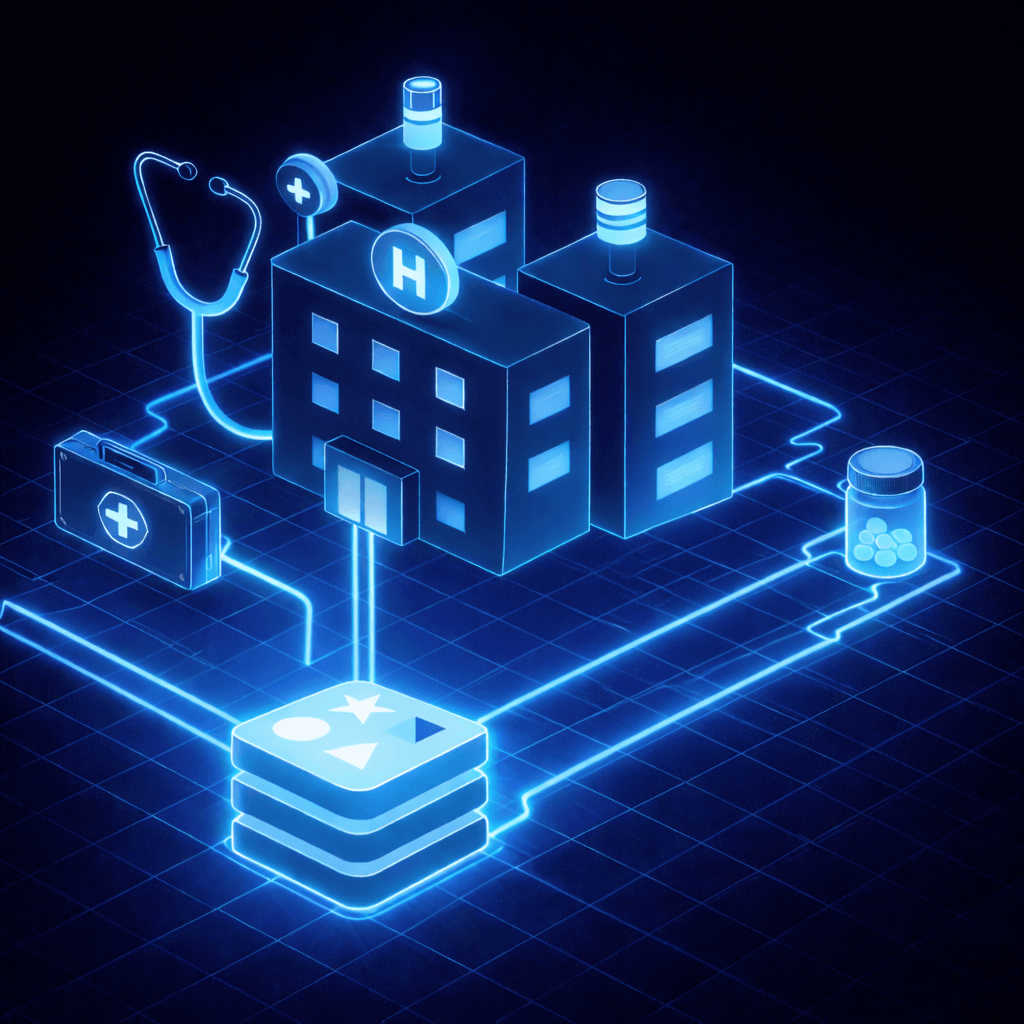
Traditional healthcare data architectures cannot support the sub-millisecond processing required for care gap closure and member engagement. Over 70% of health plans anticipate generative AI will transform consumer health outcomes. Redis Enterprise healthcare applications enable this transformation through AI-powered fraud detection, vector search capabilities, and event-driven workflows that convert member experience into strategic revenue.
In this article, we'll go over Redis’s platform capabilities, AI implementation strategies, and build versus buy considerations for healthcare payers.
Redis Enterprise Core Platform Capabilities for Healthcare
Modern payer applications demand extreme performance and reliability to improve member outcomes and financial metrics. Redis Enterprise's core capabilities directly address these needs through in-memory architecture and enterprise-grade features.
In-Memory Data Structure Store Architecture for Healthcare Workloads
Redis Enterprise keeps active datasets in RAM, delivering sub-millisecond response times critical for healthcare operations. Provider eligibility checks and formulary lookups that traditionally take hundreds of milliseconds now complete in under one millisecond.
The platform can process over 200 million operations per second on modest clusters while maintaining latency under 1ms. Traditional disk-based databases struggle to achieve even a few thousand operations per second without significant latency degradation.
This speed transforms operational efficiency. Care gaps close the same day lab results arrive instead of weeks later, directly improving STARS ratings and member satisfaction scores.
Redis Enterprise Clustering and Active-Active Geo-Distribution Features
Redis Enterprise's shared-nothing cluster architecture enables unlimited linear scaling as membership grows. The platform delivers 99.999% uptime guarantees for active-active deployments, equivalent to less than 5 minutes of annual downtime. For multi-state regional insurers, Active-Active Geo-Distribution synchronizes multiple geographic clusters as a single logical database with full read-write capabilities in each region.
This architecture uses conflict-free replicated data types to automatically resolve write conflicts, ensuring member data stays consistent whether accessed from East Coast care management systems or West Coast provider portals. During high-volume periods like open enrollment, systems remain operational, preventing member dissatisfaction and compliance penalties.
Multi-Model Database Capabilities: JSON, Time Series, and Graph for Healthcare
Healthcare data's inherent complexity demands flexible storage models. Redis Enterprise supports RedisJSON for hierarchical documents, RedisTimeSeries for temporal data, and RedisGraph for network relationships within a single platform. This eliminates multiple disparate databases and the slow ETL processes connecting them.
A care gap closure application can use RedisJSON for member clinical data, RedisTimeSeries for medication fill timelines, and RedisGraph for member-to-provider attribution, all within one system. This multi-model approach accelerates development since cross-model data access happens within Redis's process rather than across multiple database connections.
Vector Search and Generative AI Applications in Healthcare Payers
GenAI opens new possibilities for personalized member engagement. But these applications require fast semantic search over extensive knowledge bases. Redis Enterprise's RediSearch module enables production-scale AI-powered healthcare applications.
Vector Databases for Healthcare AI: Redis Enterprise RediSearch Implementation
Vector databases store high-dimensional numeric embeddings representing unstructured data, enabling similarity searches that find semantically related items. This forms the foundation for retrieval-augmented generation (RAG), where LLM queries are enhanced with relevant context retrieved via vector similarity.
Redis Enterprise's RediSearch module provides native vector indexing. Health plans store embeddings of policy documents, benefit summaries, and clinical guidelines, then perform millisecond similarity lookups.
When members ask about insulin coverage, systems convert queries into vectors and use Redis to fetch closest-matching passages from formulary documents. Cloud benchmarks demonstrate Redis vector search retrieving results in single-digit milliseconds for millions of vectors, all within the same platform handling transactional data.
GenAI for Member Experience: Vector Embeddings and Similarity Search
By 2025, nearly 50% of patients will prefer chatbots for initial inquiries over human agents. Redis Enterprise powers these AI applications through combined vector search and real-time data capabilities. When members ask why claims were denied, AI assistants backed by Redis immediately retrieve claim details and policy text for specific explanations. Blue Cross Blue Shield of Minnesota's Blue Care Advisor platform integrated AI chatbots. This empowers members to get quick answers while reducing care management-assisted calls and costs.

Clinical Documentation AI with Redis Vector Search and RAG Architecture
Generative AI transforms clinical documentation through RAG architecture. Redis Enterprise serves as the high-speed knowledge base storing embeddings of coding guidelines, policy rules, and historical cases. When LLMs generate or validate documentation, similarity search in Redis fetches relevant references provided as generation context.
Member Query Processing with Redis-Powered Large Language Model Integration
LLMs integrated with enterprise data revolutionize member information access. Using Redis as a fast data cache, LLMs query information like current deductible usage or medication formulary tiers. Redis's sub-millisecond response enables fluid dialogue without database wait times.
Amazon MemoryDB for Redis is HIPAA-eligible, confirming Redis can be configured to handle protected health information securely. LLM systems safely use Redis as working memory for sensitive member data while maintaining compliance. Aetna launched conversational AI navigation tools helping members understand benefits and find care, likely leveraging real-time Redis data integration.
AI-Powered Fraud Detection with Redis Enterprise
Healthcare fraud represents 3-10% of total health spending, potentially exceeding $300 billion annually. Redis Enterprise provides ideal infrastructure for real-time fraud detection through high-speed data ingestion and multi-model pattern analysis.
Real-Time Claims Fraud Detection Using Redis Streams and ML Models
Traditional fraud detection identifies fraudulent claims retrospectively after payment. Redis Streams enables real-time fraud scoring, evaluating each claim on arrival. Claims entering via 837 transactions publish to Redis Streams, triggering automated pipelines with ML model inference, rule checks, and investigation routing.
Mid-size health plans receiving 500,000 daily claims can process all through Redis Streams to fraud scoring microservices, scoring each claim within milliseconds. One large Medicaid payer's AI system using streaming analytics identified over $5 million in fraudulent claims within the first month. Real-time approaches prevent fraud rather than just detecting it afterward, directly improving medical loss ratios.
Behavioral Pattern Analysis with Redis Time Series for Fraud Prevention
Fraudulent behaviors manifest as temporal patterns. RedisTimeSeries enables health plans to maintain metrics like weekly claims volume per provider, enabling rapid trend analysis and anomaly detection. If durable medical equipment suppliers typically submit $50,000 monthly but bill $40,000 in the first week, systems query RedisTimeSeries to flag this spike immediately for review.
During the pandemic, OIG identified 1,714 providers with high-risk telehealth billing patterns. Redis-based solutions maintain sliding window counts of daily telehealth visits per provider, automatically flagging those exceeding normal thresholds. NHCAA data shows every $1 invested in anti-fraud efforts yields approximately $7 in savings, making Redis pattern analysis high-ROI.
Provider Network Anomaly Detection with Redis Graph Database
Fraud schemes involving provider networks require relationship analysis. RedisGraph models entities as nodes and relationships as edges, running graph queries detecting unusual connections. If multiple providers exclusively share the same patient set, this indicates potential coordinated fraud rings.
Graph analysis computes centrality metrics and community detection to identify clusters. RedisGraph's in-memory operation makes complex graph traversals extremely fast, reducing investigative cycles from weeks to minutes and enabling real-time link analysis during suspicious claim flagging.
Multi-Layered Fraud Scoring with Redis Enterprise Active-Active Replication
Robust fraud defense employs multiple layers including rules-based flags, statistical anomaly scores, and graph heuristics. Redis Enterprise Active-Active replication enables different fraud detection pipeline components to operate simultaneously across regions.
Different microservices use RedisStreams for ML scoring, apply business rules, and traverse RedisGraph for anomalies in parallel. Active-Active deployment means fraud scoring services in multiple regions process claims independently while staying synchronized. Even small percentage reductions in fraudulent payouts save mid-size plans tens of millions annually.
Event-Driven Healthcare Workflows with Redis Enterprise
Traditional batch processing introduces delays negatively impacting member experience and plan financials. Redis Enterprise's messaging via Streams and Pub/Sub enables event-driven workflows responding to changes in real time.
Redis Streams for Real-Time Claims Processing and Eligibility Updates
Payers pursue real-time claims adjudication processing claims within seconds. Redis Streams provide log-based message queues feeding real-time pipelines. Claims append to Redis Streams, which consumer services read for eligibility verification, policy rules, and pricing.
Health plans reduced end-to-end claims processing from days to minutes. Real-time adjudication could save approximately $15 per claim, amounting to tens of billions in system-wide savings. When member coverage status changes, updates publish as events to all interested systems through Redis, ensuring providers get faster claims answers and members see immediate portal updates.
Care Gap Closure Automation with Redis Pub/Sub Messaging
Redis Pub/Sub provides lightweight messaging for real-time care gap closure workflows. When claims for required screenings arrive, events publish to relevant topics and subscriber services immediately update member gap status, triggering follow-up actions.
Member Journey Orchestration Using Redis Enterprise Event Processing
Redis Enterprise orchestrates member journeys by tracking state and triggering next best actions. When new members enroll, enrollment events flow through Redis initiating welcome emails, health risk assessment scheduling, and program introductions. Each completed step generates subsequent action-triggering events.
CMS File Processing Pipelines with Redis Enterprise Data Structures
Redis Enterprise accelerates CMS file processing pipelines significantly. Records load into Redis Streams for immediate consumer worker processing, completing entire files in minutes versus hours.
Unified Data Model Implementation for Healthcare Payers
Health plans traditionally maintain siloed data systems with claims, member demographics, and clinical data separated. Redis Enterprise enables unified data models bringing disparate sources together in cohesive real-time layers.
Redis Enterprise JSON for Complex Healthcare Data Schema Management
RedisJSON stores complete nested data like FHIR Patient resources as single JSON documents, preserving natural structure and enabling schema flexibility.
Unified member records that applications fetch or update in single operations include:
- Personal information
- Plan enrollment
- Conditions
- Medications
- Recent claims
- Care gaps as nested JSON
JSON fields indexed with RediSearch enable queries. Finding all members with diabetes having open breast cancer screening gaps involves indexing conditions and gap status for quick cohort retrieval supporting population health outreach campaigns.
Member 360 Views with Redis Hash and Sorted Set Optimizations
Redis Hashes and Sorted Sets optimize common access patterns for 360-degree member views. Sorted Sets track members by numeric scores, such as risk score leaderboards for care management prioritization. Each member interaction updates their score, maintaining continuously updated insights.
After introducing Redis caching and aggregation, one health insurance tech lead reduced member profile load time from approximately 4 seconds to under 100 milliseconds, vastly improving call center efficiency and first-call resolution rates.
Multi-Source Data Integration: Claims, Eligibility, and Clinical Data Unification
Redis Enterprise serves as convergence points where:
- Streams from claims systems
- Enrollment systems
- Pharmacy benefit managers
- Lab vendors
- EHRs merge into unified models
CAQH reports found U.S. payers and providers spend over $89 billion annually on administrative overhead from lack of interoperability. Redis acting as real-time integration hubs directly reduces these costs through automated data reconciliation.
Real-Time Data Synchronization Across Epic, Cerner, and Payer Systems
Redis serves as intermediary FHIR data stores that payer and provider systems both access. Many EHRs like Epic provide FHIR API endpoints. Payers pull data from Epic APIs for their members, storing it in Redis as JSON FHIR resources. Because Redis operates in-memory, these API calls execute very fast, critical when doctors wait for data in exam rooms, bridging visibility gaps and reducing duplicated testing waste.
Technical Implementation Framework for Healthcare Compliance
Healthcare innovation requires security and compliance foundations. Redis Enterprise offers robust security features enabling organizations to leverage platform power while maintaining HIPAA and HITRUST compliance.
HIPAA and HITRUST Configuration for Redis Enterprise Security Features
Redis Enterprise provides role-based access control defining users and roles with least privilege. Platform integration with external identity providers like LDAP or Active Directory enables centralized authentication consistent with HITRUST requirements. Administrative logging and auditing capabilities integrate into SIEM systems for continuous monitoring, meeting HITRUST and HIPAA requirements for ePHI access monitoring.
Redis Enterprise Encryption: At-Rest, In-Transit, and Application-Level Security
Redis Enterprise supports encryption at rest through AES for persistence files and in transit through TLS 1.2+. Amazon MemoryDB for Redis HIPAA-eligibility with default encryption confirms Redis technology meets HIPAA encryption requirements when properly configured. In-transit encryption uses TLS for all client connections, while at-rest encryption protects data Redis persists through snapshotting and append-only files.
Audit Logging and Compliance Monitoring with Redis Enterprise Operations
Redis Enterprise admin consoles log configuration changes, database creation, and user modifications. Logs export to SIEM systems for security monitoring. HIPAA requires certain log retention for 6 years, requiring operations teams to archive Redis logs accordingly through periodic transfers to archive storage, providing tamper-proof evidence for compliance audits.
Data Residency and Geographic Controls for Healthcare Data Governance
Redis Enterprise geo-distribution features configure to support data residency requirements by controlling replication and persistence locations. For multi-jurisdiction organizations, separate Redis clusters deploy per region for regulatory compliance like GDPR while maintaining central management, ensuring PHI doesn't inappropriately cross geographic boundaries while maintaining local access performance.
Build vs Buy Decision Framework for Redis Enterprise Healthcare Applications
Technology executives face critical decisions between building custom infrastructure or adopting Redis Enterprise. Choices impact timelines, costs, and strategic flexibility.
Custom Development vs Redis Enterprise: Feature Comparison and TCO Analysis
Building in-house infrastructure for real-time processing requires dedicated infrastructure engineers, typically costing several million dollars annually.
Redis Enterprise auto-tiering cuts memory costs by up to 70% using SSDs for cold data. One regional health plan consolidating multiple solutions into Redis Enterprise reduced infrastructure spend by 30%, saving hundreds of thousands annually on operational overhead while improving performance and reliability.
Migration Strategies from Legacy Caching and Database Solutions
Migration strategies include phased cache layer introduction, legacy system data seeding and syncing, and parallel runs for critical applications building confidence. One insurer migrated eligibility verification from AS/400 stored procedures to Node.js services hitting Redis, handling increased volume with reduced CPU while enabling easier updates and greatly improving organizational agility.
Time-to-Market Advantages of Redis Enterprise vs In-House AI Infrastructure
Building in-house AI infrastructure requires 12 to 18 months before deployment. Redis Enterprise becomes operational within weeks, with initial applications deployed in months. This time advantage directly impacts revenue capture windows for STARS improvements and fraud prevention.
The platform's performance scales to support real-time fraud detection across millions of daily claims. It handles 150,000 to 200,000 calls per second against a 3 TB database.
For healthcare payers implementing similar fraud scoring systems, Redis eliminates lengthy infrastructure buildouts. Plans facing CMS submission deadlines or open enrollment surges gain deployed fraud detection capabilities in weeks rather than quarters. This deployment speed translates to captured revenue rather than missed opportunities.
Final Takeaways
Redis Enterprise provides foundational capabilities delivering these outcomes through in-memory processing, multi-model data support, and active-active geo-distribution. Whether implementing vector search for generative AI, building real-time fraud detection, or orchestrating complex care management workflows, platforms accelerate implementation from years to months.
For CTOs and technology executives, if organizations need measurable STARS rating improvements, fraud prevention, and member satisfaction gains within months rather than years, Redis Enterprise offers compelling paths forward. Platforms reduce complexity, accelerate development, and enable engineering teams to focus on payer-specific innovation, ultimately transforming member experience into strategic revenue drivers.
Frequently Asked Questions
Can Invene help healthcare payers implement Redis Enterprise?
Yes. Invene is a healthcare-focused software engineering and AI consultancy that specializes in payer data architecture, EHR integrations, and real-time data infrastructure. For Redis Enterprise implementations, Invene brings deep familiarity with the payer data environment, including eligibility pipelines, claims processing, risk adjustment workflows, and STARS quality reporting. That domain knowledge matters because Redis performs differently depending on how payer data is structured, how frequently eligibility records refresh, and which downstream systems consume cached data.
Invene designs Redis architectures that fit existing payer infrastructure rather than requiring organizations to adapt their operations around a new tool. Engagements typically begin with a targeted discovery phase to map data flows, identify latency bottlenecks, and define the right caching and integration strategy before any build begins. Organizations looking to accelerate Redis Enterprise deployment without the risk of a generic implementation can connect with us to find out more.
What makes Redis Enterprise different from open-source Redis for healthcare applications?
Redis Enterprise adds clustering for unlimited scaling, active-active geo-distribution for multi-region availability with 99.999% uptime guarantees, enhanced security features for HIPAA compliance, and enterprise support. The platform processes over 200 million operations per second while maintaining sub-millisecond latency, far exceeding open-source Redis capabilities. For healthcare applications processing millions of member records, clustering enables scaling beyond single-node limitations, active-active provides disaster recovery with low latency, and enhanced security reduces compliance burden while vendor support optimizes healthcare-specific workloads.
How does Redis Enterprise integrate with existing EHR systems like Epic and Cerner?
Redis Enterprise acts as integration layers between EHR systems and payer applications. Data from Epic and Cerner flows into Redis where it's normalized, enriched with payer data, and made available to downstream applications through HL7 interfaces, FHIR APIs, or custom connectors. Redis provides consistent data models regardless of which EHR generated data, reducing system-to-system integrations needed while enabling sub-millisecond response times critical for point-of-care applications where doctors wait for information during patient visits.
Can Redis Enterprise handle HIPAA compliance requirements for protected health information?
Yes, Redis Enterprise includes encryption at rest and in transit, comprehensive role-based access controls, detailed audit logging, and data residency controls meeting HIPAA requirements. Amazon MemoryDB for Redis HIPAA-eligibility confirms technology meets requirements when properly configured. Redis Enterprise supports integration with external identity providers like LDAP or Active Directory for centralized authentication, while audit logs export to SIEM systems for continuous monitoring as required by HIPAA and HITRUST frameworks for protected health information access oversight.
What are typical implementation timelines for Redis Enterprise in healthcare payer environments?
Basic deployments supporting member lookup caching and session management become operational in 2-4 weeks. Adding fraud detection capabilities or AI-powered member service applications typically requires 2-3 months including model development. Comprehensive implementations including EHR integration, unified member views, and multiple AI applications might take 4-6 months. These timelines compare favorably to 12-18 months for building equivalent in-house infrastructure, representing significant time-to-market advantages that enable faster STARS rating improvements and member satisfaction gains.
How does Redis Enterprise pricing compare to building custom real-time infrastructure for healthcare applications?
Total cost of ownership analysis over three years typically shows Redis Enterprise costs 40-60% less than building equivalent infrastructure in-house when accounting for engineering time, ongoing maintenance, security hardening, compliance validation, and opportunity costs. Redis Enterprise auto-tiering cuts memory costs by up to 70% using SSDs for cold data. One regional health plan reduced infrastructure spend by 30% and saved hundreds of thousands annually on operational overhead by consolidating multiple solutions into Redis Enterprise while achieving faster implementation timelines and improved performance metrics.

James founded Invene with a 20-year plan to build the world's leading partner for healthcare innovation. A Forbes Next 1000 honoree, James specializes in helping mid-market and enterprise healthcare companies build AI-driven solutions with measurable PnL impact. Under his leadership, Invene has worked with 20 of the Fortune 100, achieved 22 FDA clearances, and launched over 400 products for their clients. James is known for driving results at the intersection of technology, healthcare, and business.
Ready to Tackle Your Hardest Data and Product Challenges?
We can accelerate your goals and drive measurable results.